
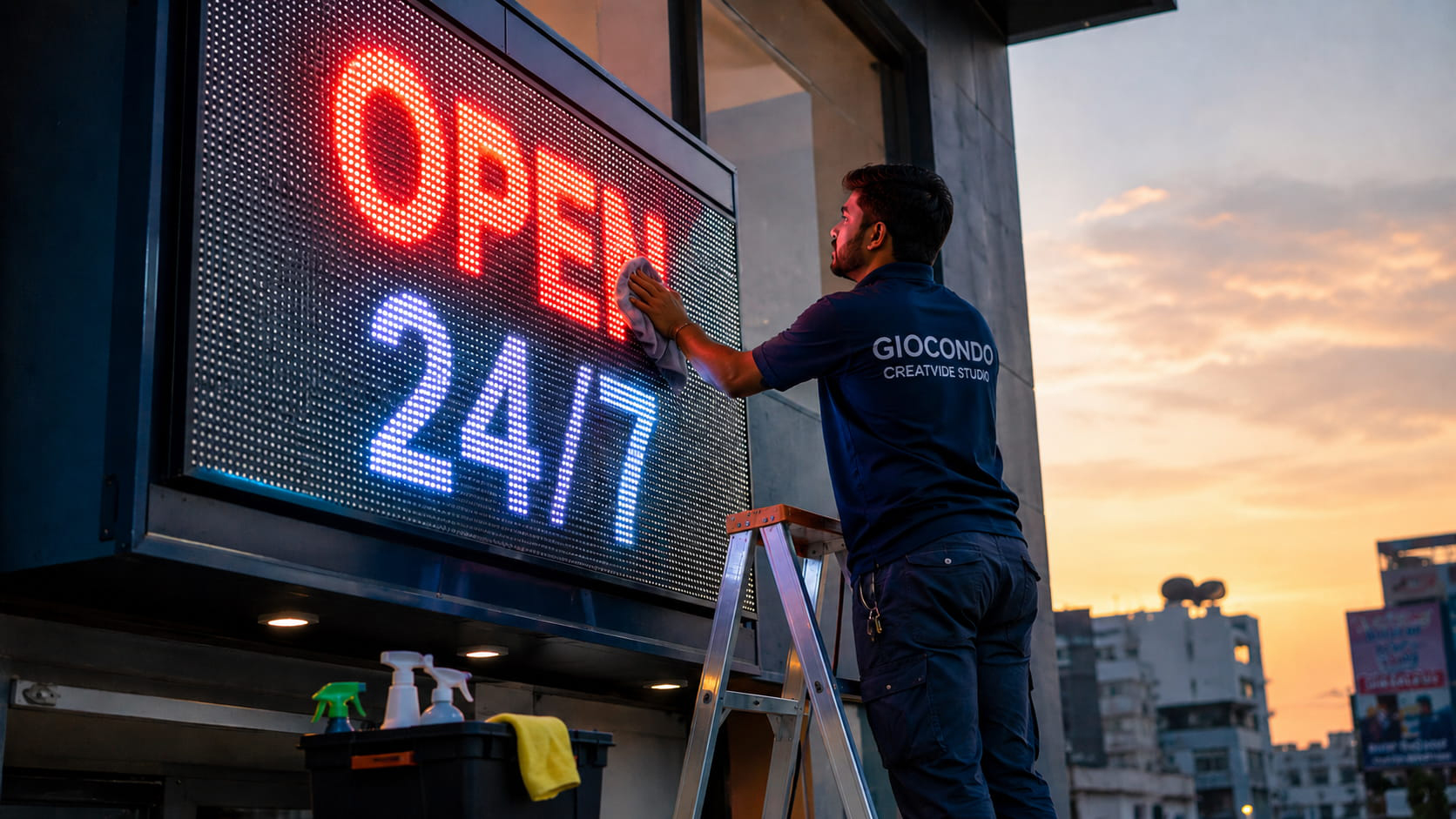
Chennai's intense heat and humidity can be a silent killer for electronic signage. At Giocondo, we use Samsung and Osram modules, but even the best technology needs proper care to last. Here are 5 expert tips to maximize your LED signage investment.
1. Use High-Quality Power Supplies
Most LED failures are caused by power supply issues, not the LEDs themselves. Cheap drivers overheat, cause flickering, and eventually fail completely. Always use MeanWell or equivalent IP67-rated waterproof power supplies. These provide stable voltage, surge protection, and thermal shutdown – ensuring your signage runs smoothly for years.
2. Implement Scheduled Dimming
LEDs running at 100% brightness 24/7 generate excessive heat. Using IoT-enabled controllers, you can dim your signage by 20-30% after midnight. This simple practice reduces heat buildup and extends LED lifespan by up to 40%. You save electricity too!
3. Regular Dust and Debris Cleaning
Chennai's dusty environment can accumulate on LED modules and acrylic faces, blocking heat dissipation. Schedule a professional cleaning every 3-6 months. For outdoor signs, ensure water drainage holes aren't blocked by debris.
4. Moisture Protection Checks
Monsoon seasons bring humidity and water ingress. Check silicone seals around letters and power supply boxes. If you see condensation inside your sign, call for service immediately – water damage is the #1 killer of LED signage.
5. Annual Professional Inspection
Even the best-maintained signs need professional attention. Our Giocondo team offers annual health checks – we test power supplies, check module brightness uniformity, and replace any failing components before they cause downtime.
A Practical Maintenance Schedule
The five tips above work best when they're actually scheduled rather than done "when you remember." Here's a realistic cadence for a typical Chennai storefront or office sign:
| Frequency | What to Check |
|---|---|
| Monthly | Visual check for dim/flickering sections, dust buildup on visible faces |
| Before Monsoon (May-June) | Inspect silicone seals, clear drainage holes, check power supply housing for cracks |
| Every 3-6 Months | Professional cleaning of modules and acrylic faces |
| Annually | Full professional inspection - power supply testing, brightness uniformity, component replacement before failure |
Warning Signs You Shouldn't Ignore
Catching a problem early is almost always cheaper than an emergency repair. Watch for:
- Flickering or pulsing - usually a power supply issue, not the LEDs themselves. Left unaddressed, this stresses the driver further and can cascade into a full failure.
- Uneven brightness across sections - can indicate a partially failed driver or a module nearing end-of-life. Individual sections are often replaceable without redoing the whole sign.
- Condensation inside the housing - a sign that a seal has failed. This is the single most common cause of premature LED failure in Chennai's climate, and it's usually a same-week fix if caught early versus a full replacement if ignored through a monsoon season.
- A noticeably warmer-than-usual housing - can indicate a cooling/ventilation blockage building up heat faster than the module can dissipate it.

Written by Giocondo Creative Studio
With 15+ years of signage engineering experience in Chennai, our team shares industry insights to help you make informed decisions.
Need Maintenance? Contact Us →