
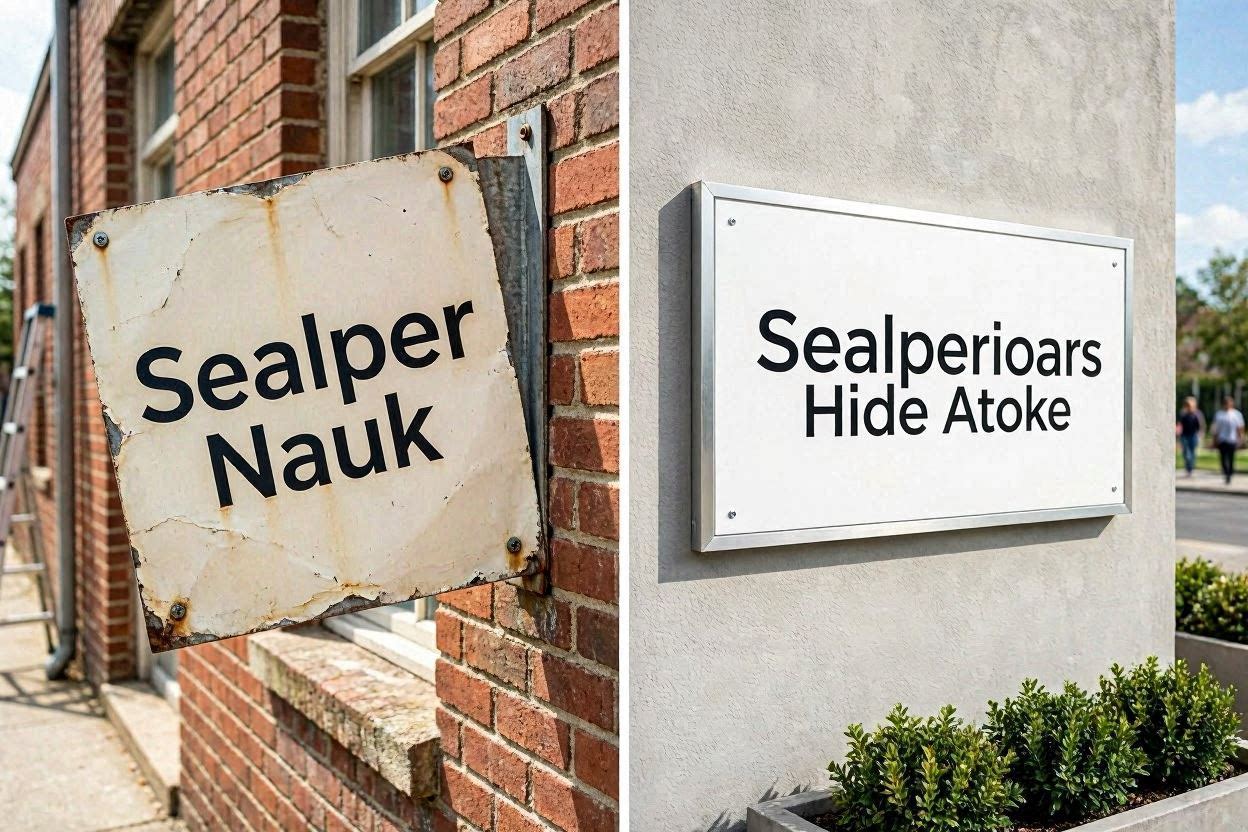
A beautiful sign installed poorly will look terrible within months and may even become a safety hazard. Here are the most common mistakes we see when non‑professionals or low‑bid installers handle signage – and how to avoid them.
1. Wrong Mounting Height
Signs placed too high become invisible; too low they obstruct movement. For storefront signage, the bottom of the sign should be at least 7 feet above the pavement. For interior wayfinding, eye level is usually 5‑6 feet. Always follow local building codes.
2. Ignoring Wind Load on Outdoor Signs
Large outdoor signs (pylons, channel letters) must be engineered to withstand local wind speeds. Chennai monsoon winds can exceed 100 km/h. Using insufficient brackets or fasteners leads to loosening, rattling, or dangerous collapse. Always ask for wind load calculations.
3. Poor Electrical Connections
Waterproof junction boxes, proper grounding, and sealed wire entries are not optional. Many DIY installations skip these, leading to short circuits, flickering, or fire hazards. Use only IP65‑rated components for outdoor signs.
4. Wrong Substrate for Outdoor Use
Using indoor materials (e.g., uncoated MDF, standard acrylic) outside causes warping, fading, and peeling within months. Always choose UV‑stable, weather‑resistant materials like ACP, acrylic with UV coating, or powder‑coated aluminium.
5. No Maintenance Plan
Even the best installation needs periodic checks – tighten bolts, clean LEDs, inspect seals. Many businesses neglect this until something fails. A simple biannual inspection can extend sign life by years.
The Real Cost of Cutting Corners
It's worth being specific about what a bad installation actually costs, because "professional installation is worth it" is easy to say and easy to ignore when a lower quote is sitting in front of you. In practice, the pattern we see repeatedly is: a sign installed with the wrong bracket load rating or without proper wind engineering doesn't fail immediately - it fails during the first serious monsoon storm, often 6-18 months in. At that point you're paying for a full re-installation, sometimes including facade repair from the original mounting damage, on top of the lost signage visibility during the gap. A wind-load calculation and correct bracket spec at the outset typically adds a small fraction to the original quote - it's one of the cheapest insurance decisions in the entire project.
Questions to Ask Before You Approve Any Installation
Whether you're working with us or evaluating another installer, these are worth asking directly:
- What wind load rating are the brackets/fasteners specified for, and does that match Chennai's actual conditions - not just a generic default?
- Are all outdoor electrical components IP65-rated, and is that specified in writing, not just verbally?
- What substrate is being used, and is it rated for outdoor UV/humidity exposure specifically - not just "weather-resistant" as a marketing phrase?
- Is there a written maintenance recommendation, or does the installer's involvement end the day the sign goes up?
- Who's liable if the sign fails within the first year due to an installation issue rather than a manufacturing defect?
Conclusion
Don't let a bad installation ruin your brand impression. Giocondo provides end‑to‑end professional installation with warranties. Contact us for a consultation.
Need Professional Installation?
We handle everything – from structural engineering to final cleaning.
Get a Quote →
Written by Giocondo Creative Studio
15+ years of error‑free signage installations across Chennai.
Learn More →